


So says the fund manager who is raising capital followed by, “but, hold on, look at my new offering.”
Unlike buying a broad public-market index, a private real estate fund owns a finite collection of highly individual assets. The manager's selections therefore matter enormously. With real estate, every aspect of the property is unique based on its location, asset class, business plan, debt terms, and operator running the deal. It is impossible to create two homogeneous, interchangeable real estate funds like you can with a stock index fund where every investor has access to the same fungible securities.
Consider a Simple Thought Experiment
Let’s say you have two physically identical properties across the street from each other with the same debt terms, business plans, and planned hold times. These properties could have totally different return outcomes based on inputs like the property manager, leasing team, capex plan, or future unknowns like fire risk or future tax increases.
Now cobble together ten or twenty of these hypothetical identical properties, but with different non-controllable inputs, and call it ABC’s General Real Estate Fund, LLC. Compare this fund’s performance to the competition, let’s call their fund DEF’s General Real Estate Fund, LLC. In this simplified example, we have two general real estate funds run by two different fund managers owning unique real estate with different property managers and probably not executing the same business plan.
Relative to a stock index, one can see how real estate is not a uniform investment across funds.
The World of Real Estate is Massive
This simplified example serves to show it is very hard to commoditize the idea of a general real estate fund. Macro forces like interest rates, cap rates, unemployment, vacancy, and supply will drive the general performance of real estate at the national and MSA levels, but the property-specific traits, such as exact property location, individual tenants, and the team, both on and off site, at the property are often the driving factors between what makes a property a strong investment or a struggling one.
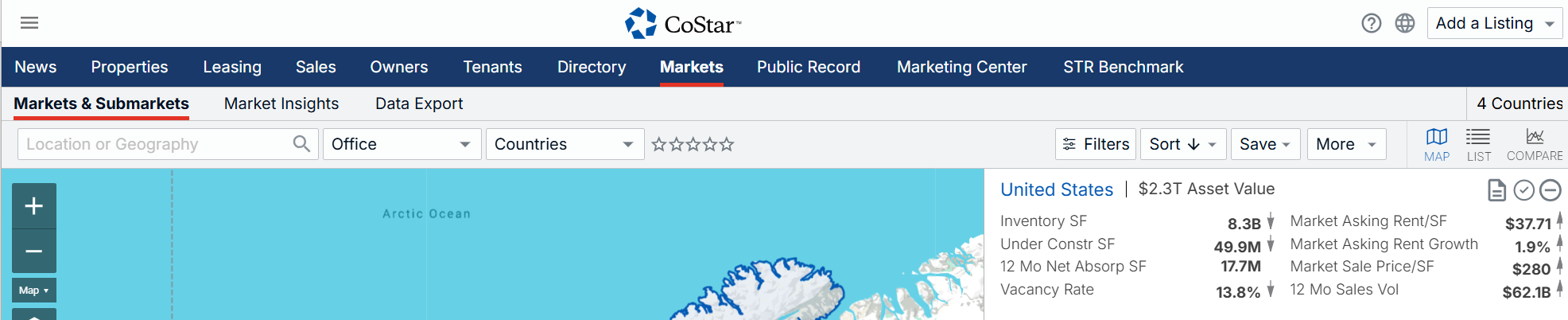
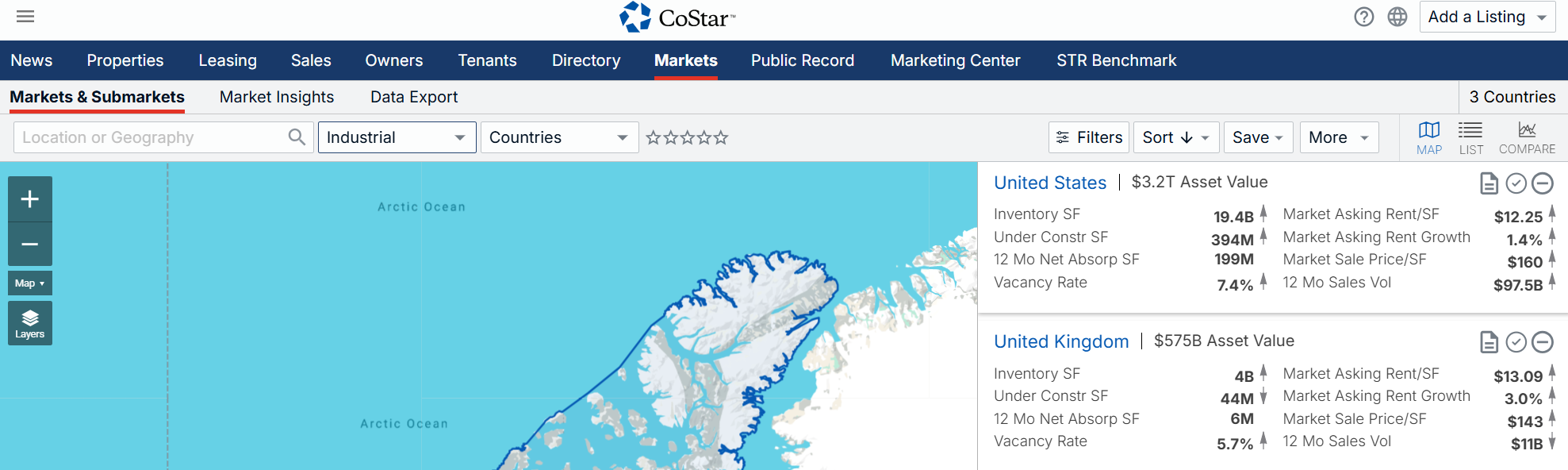
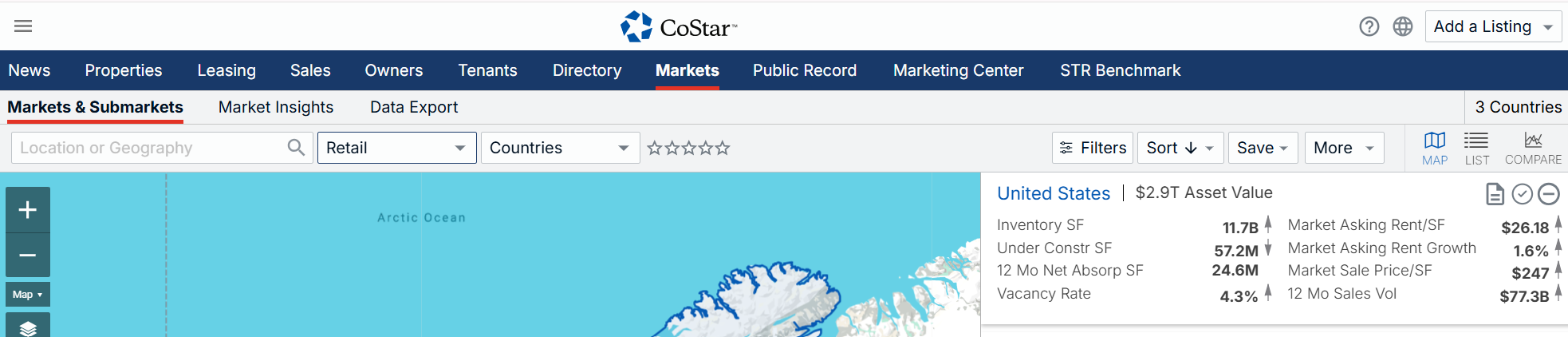
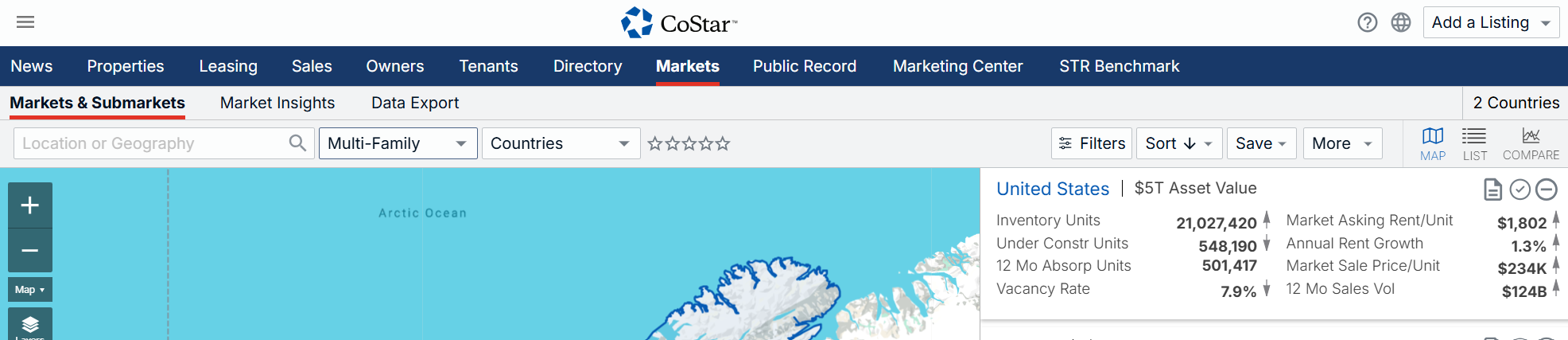
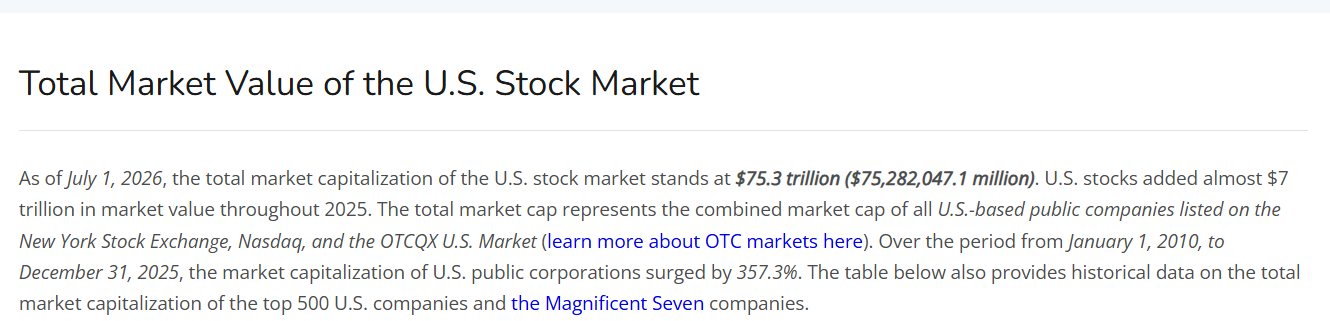
According to CoStar, as of this writing (September 2026), the commercial asset value of office, industrial, retail, and multifamily real estate in the United States is approximately $13.4 trillion ($2.3T office, $3.2T industrial, $2.9T retail, $5.0T multifamily)—and this doesn’t count farmland, cell towers, marinas, and other niche real estate. (As a point of reference, the U.S. stock market is about $75 trillion.) Even a billion-dollar-plus real estate fund represents a small section of the entire market.
What’s an investor to do if they want exposure to real estate through a fund structure?
A real estate fund needs a reason to exist. It should provide investors with a clearly defined strategy and exposure rather than simply being another pool of capital looking to buy the same real estate a similar, competing fund is trying to acquire. For an investor considering a new fund, focus on four questions.
OPPORTUNITY SET
The buy box of the manager should be defined by an investment thesis and fund size. Things like asset class, business plan, current market conditions, and expected future market conditions should be articulated by the manager. The fund should be sized appropriately for the opportunity set in the market. The manager should explain this in such a way that the investor can walk out of the meeting and say, “I get it.”
MANAGER ABILITY
The manager’s source of deal flow should be discussed. Sourcing deal flow should be a repeatable and growing process. A manager’s experience in the transaction size, asset class, and market is critical to the investor having a chance at a positive outcome. Much like you wouldn’t want to be the patient of a pre-med student setting their first broken arm, you don’t want to be the first investor with a manager trying out a new strategy.
RISK
When leverage is working for the investor, it is often dismissed as a contributor to investor returns. However, leverage comes front and center in a post-mortem of a bad investment long after the damage has been done to the original capital pool. This is not to say leverage is bad, but the investor should have an understanding of the leverage ratios the manager intends to use.
In addition to leverage, the strategy risks should be explained with at least the same level of disclosure as the potential returns. A manager who can tell you all the ways they could lose money has at least put some thought into these risks and is therefore able to communicate them to a potential investor. The manager who dodges the question either hasn’t considered the risks or could be understating potential issues in the future.
DIFFERENTIATING FACTORS
Adding a new real estate fund to an investor’s portfolio should provide exposure not already in the investor’s portfolio. If it is not, the investor should question why they wouldn’t simply invest additional funds in an existing strategy they are already comfortable with.
To borrow from 1990s singer Alanis Morissette, “It’s like ten thousand spoons when all you need is a knife.” An investor with ten similar real estate funds probably doesn’t need an eleventh.
A new manager can deliver a differentiating profile in the form of a different opportunity set, strategy, geography, asset class, duration, structure, or some other aspect of the investment the investor wants to add to their portfolio.
Closing
The world doesn’t need another cookie-cutter version of funds already in the market.
A new fund needs a reason to exist. A unique offering that provides investors with a different opportunity set or risk/return profile, run by a manager who has demonstrated the ability to execute the strategy in the past, is that reason.
If an investor can’t answer, “Why is this fund different from what I already own?” then the fund doesn’t belong in the investor’s portfolio.
What new supply is coming to market over the next three year
Sources
Terms¹ Source: CoStar, U.S. commercial real estate asset values by property type. Retrieved September 2026. Figures reflect U.S. markets only and exclude farmland, data centers, cell towers, and other specialty property types.
² Source: Siblis Research, "Total Market Value of the U.S. Stock Market," as of July 1, 2026. https://siblisresearch.com/data/us-stock-market-value/
Sources—not for print:
https://siblisresearch.com/data/us-stock-market-value/
Important Information
This article is provided solely for educational and informational purposes. The views expressed reflect general observations regarding investment analysis, private markets, real estate investing, valuation methodologies, underwriting practices, due diligence considerations, and fund structures.
The information presented is not intended as investment advice or a recommendation regarding any specific investment, manager, property, fund, security, or strategy. Readers should conduct their own independent due diligence and consult their professional advisors before making investment decisions.
Investments in private funds and alternative investments involve substantial risks and are not suitable for all investors. Such investments are generally illiquid, may involve leverage, may have limited transparency, may be difficult to value, and may result in the partial or complete loss of invested capital.
Certain statements contained herein may constitute forward-looking statements. These statements reflect current assumptions and expectations regarding future events and market conditions.
Actual results may differ materially from those expressed or implied due to changes in economic conditions, capital markets, interest rates, tenant demand, property performance, financing availability, governmental actions, and other factors beyond the control of Valoran Capital Management.